Corporate Internet Banking Revamp & Design System
Modernising how business customers bank across Nigeria and the UK, while building the design system to unify it all

Context
It worked. Until the business outgrew it.
FCMB's corporate internet banking platform was functional, but barely. Core features like FAQs were broken. Activity logs were incomplete. And as the bank expanded across Nigeria and the UK, the cracks became impossible to ignore. The brief wasn't a refresh. It was a ground-up rebuild.
Challenge
Two markets. Twenty modules. Seven net-new capabilities.
Corporate banking users in Nigeria and the UK have different regulatory requirements, different workflows, and different expectations. Every module had to work for both, without feeling like two different products bolted together. On top of that, the platform needed seven entirely new capabilities that had never existed before: a real-time dashboard overview, multi-level approvals, configurable authentication, recurring payments, bill payments, a full audit trail, and real-time notifications.
My Role
End-to-end across the entire platform.
I owned design across both the customer and merchant experience, end to end: from onboarding and authentication through to outgoing payments, FX transfers, collections, capital, and team management. Alongside the product work, I established and led the design system: 5 foundation layers, 21 shipped components, built to give every module a consistent foundation and speed up engineering handoff.
Onboarding
Getting businesses onto the platform.
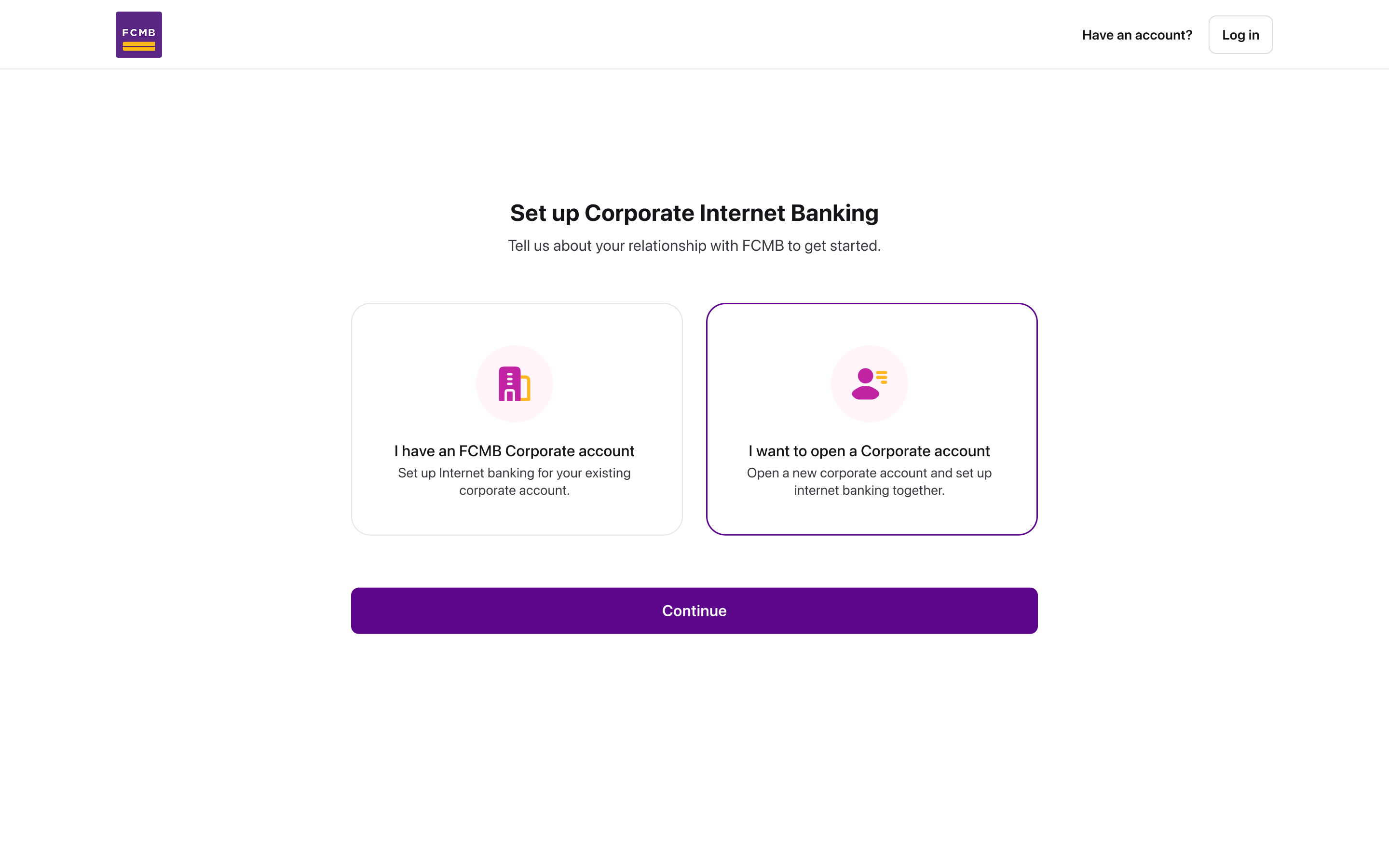
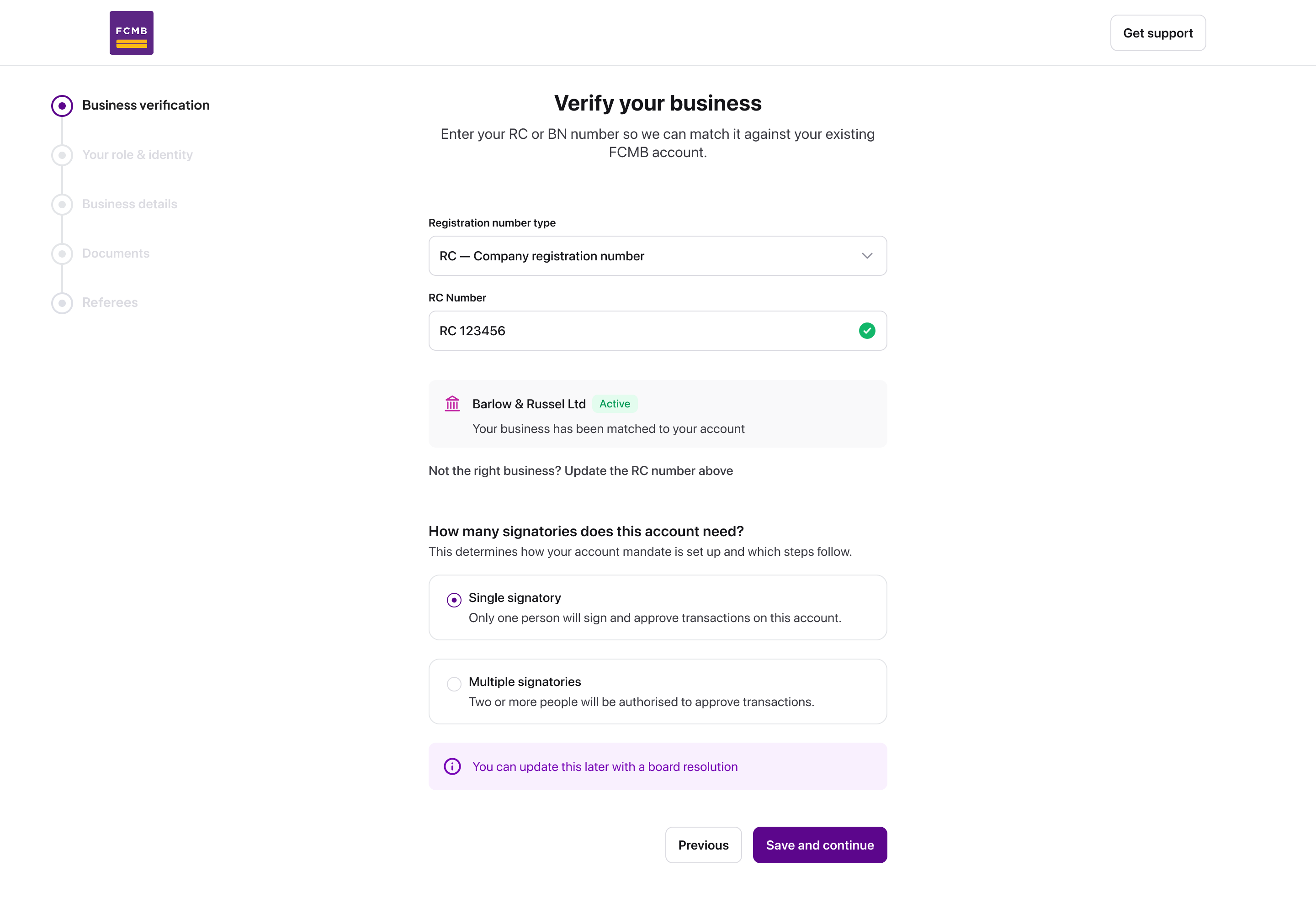
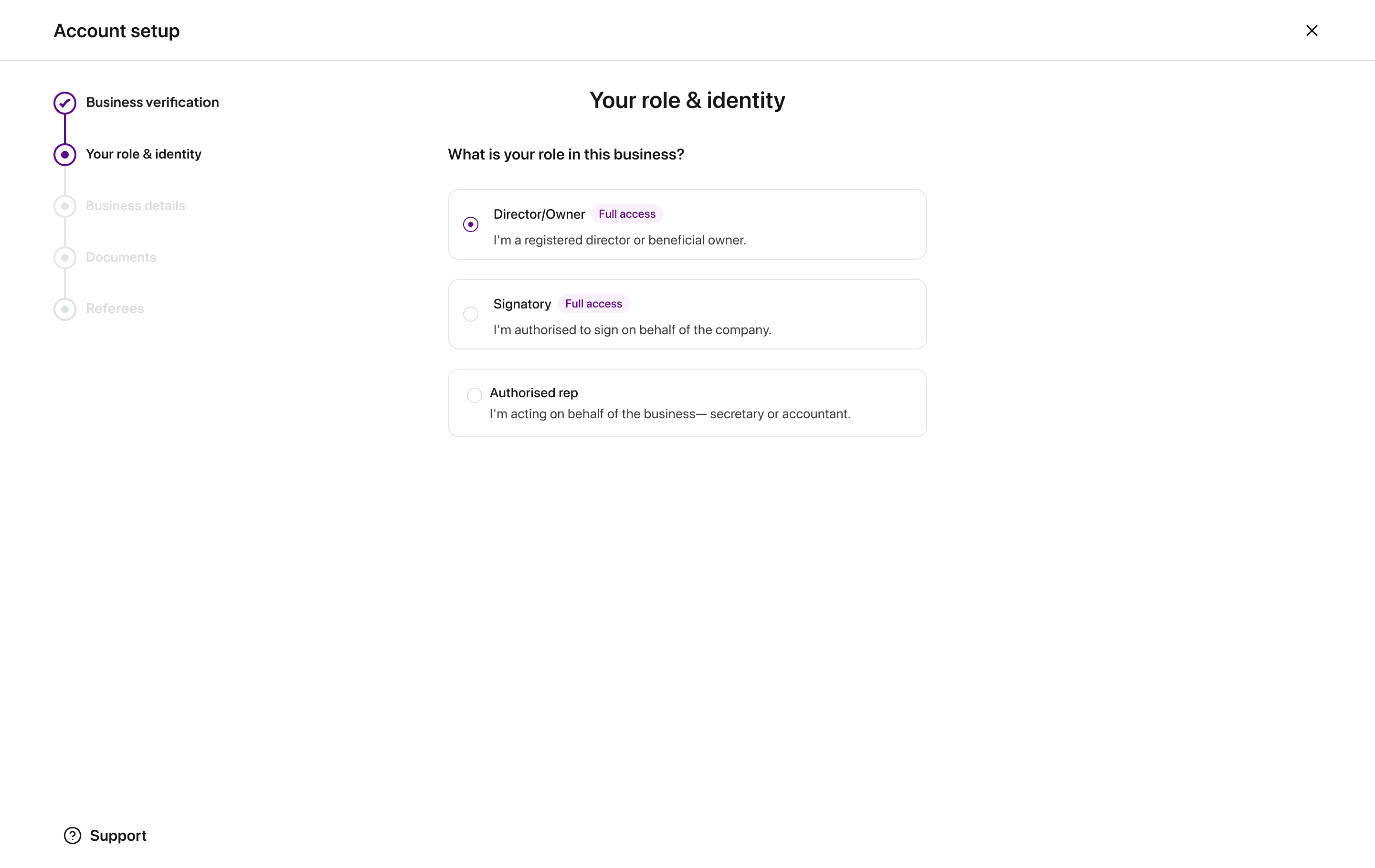
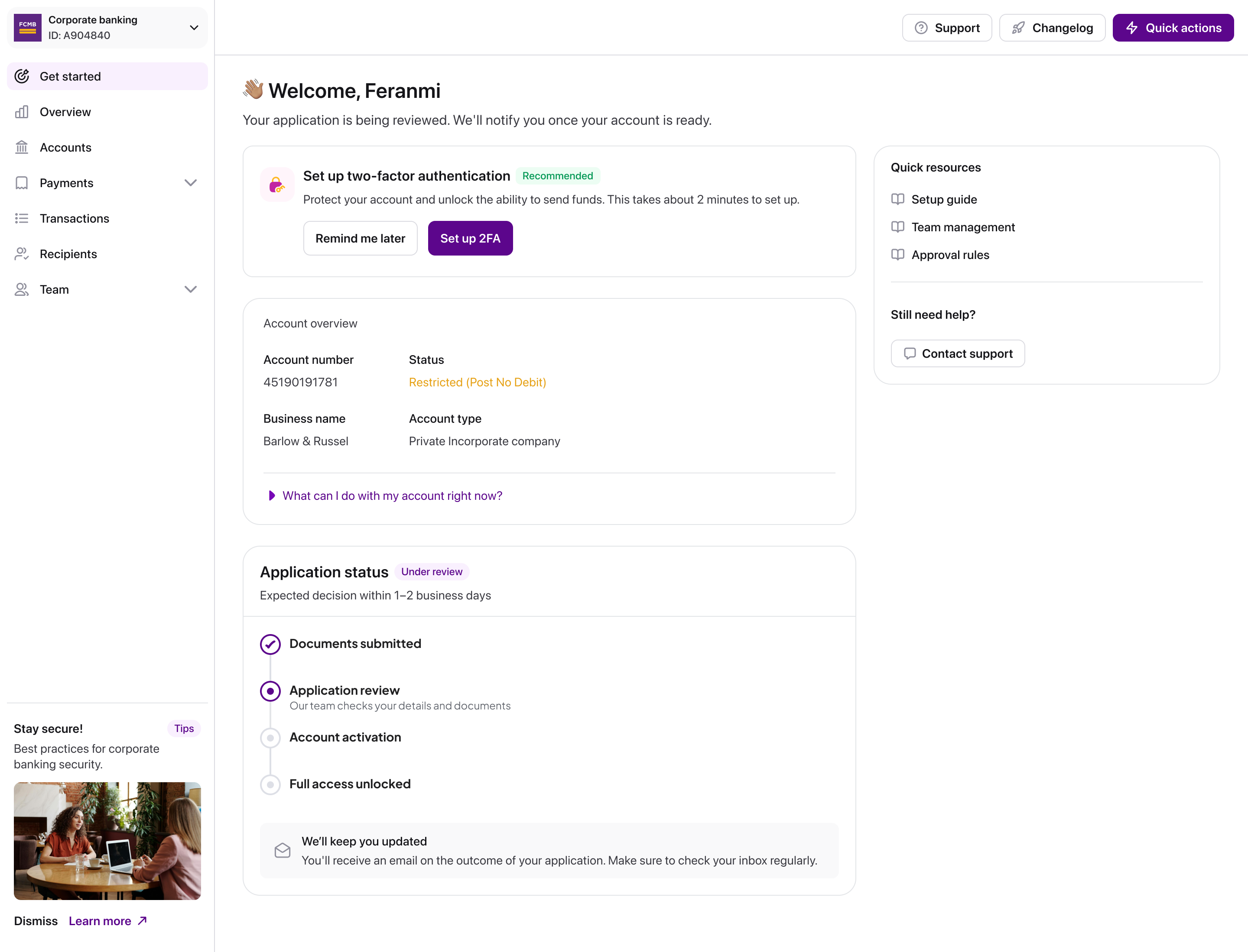
The onboarding flow had to handle company verification, role-based access setup, and regulatory requirements across two markets, without making the experience feel like a compliance checklist.
Collections
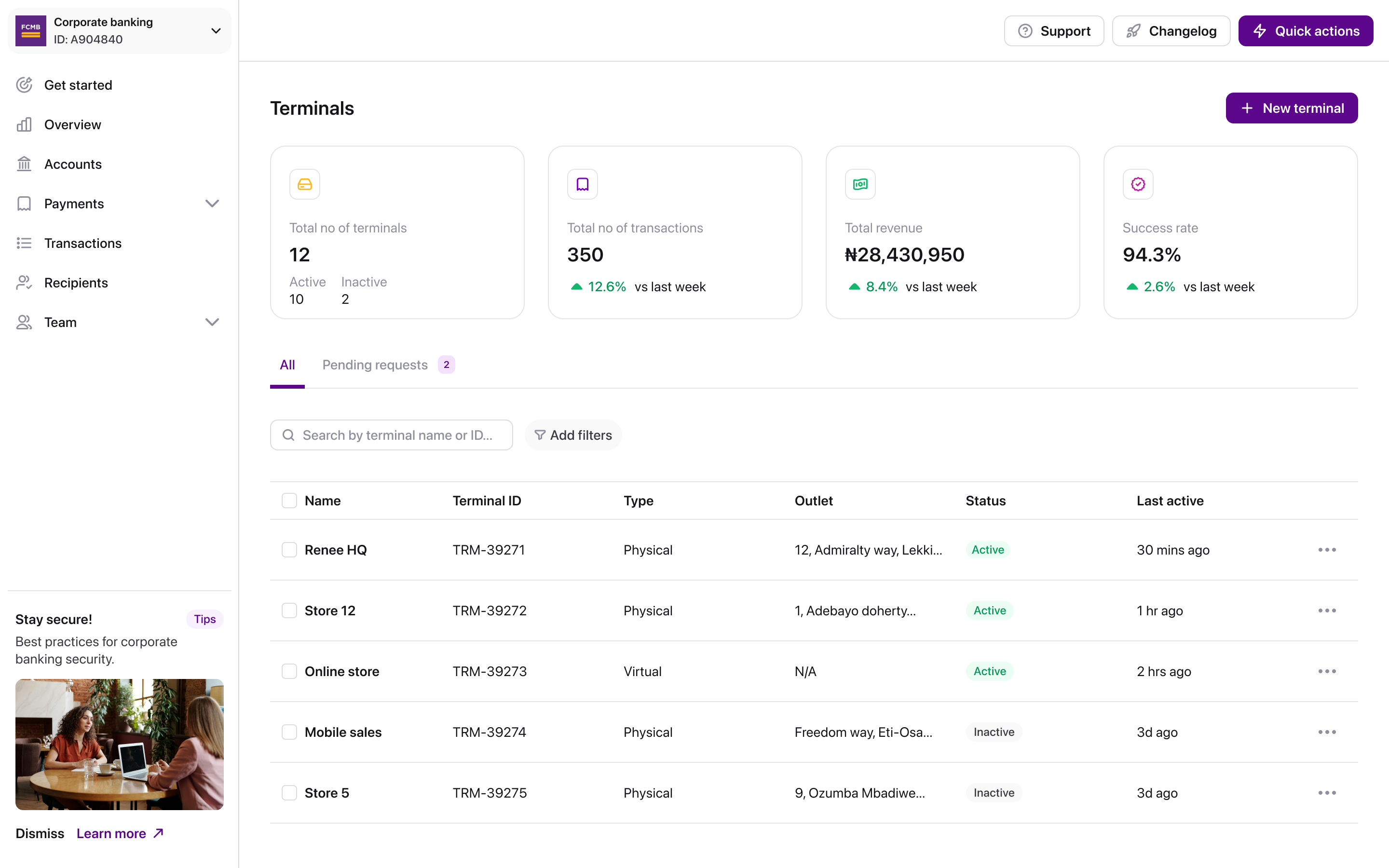
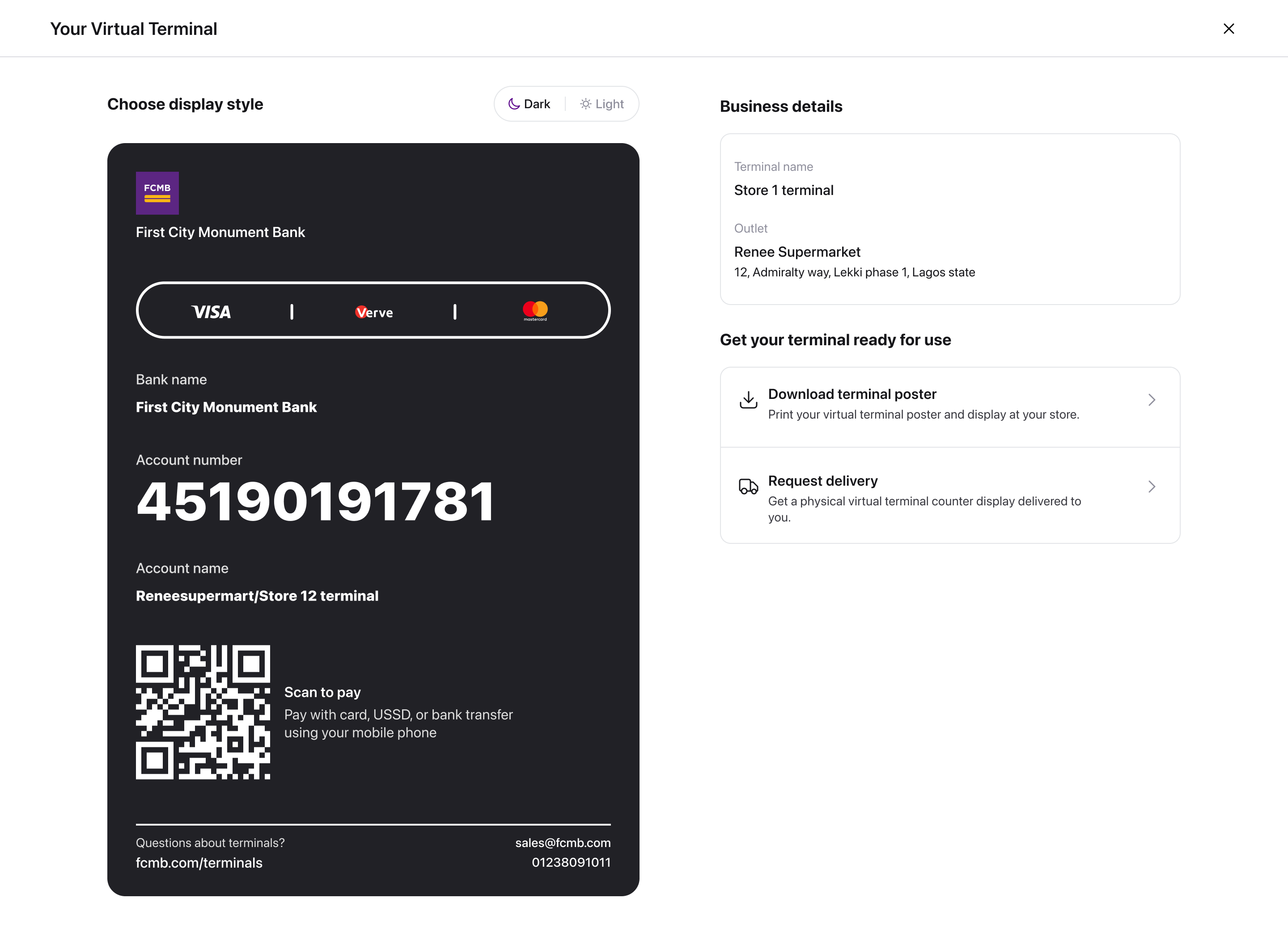
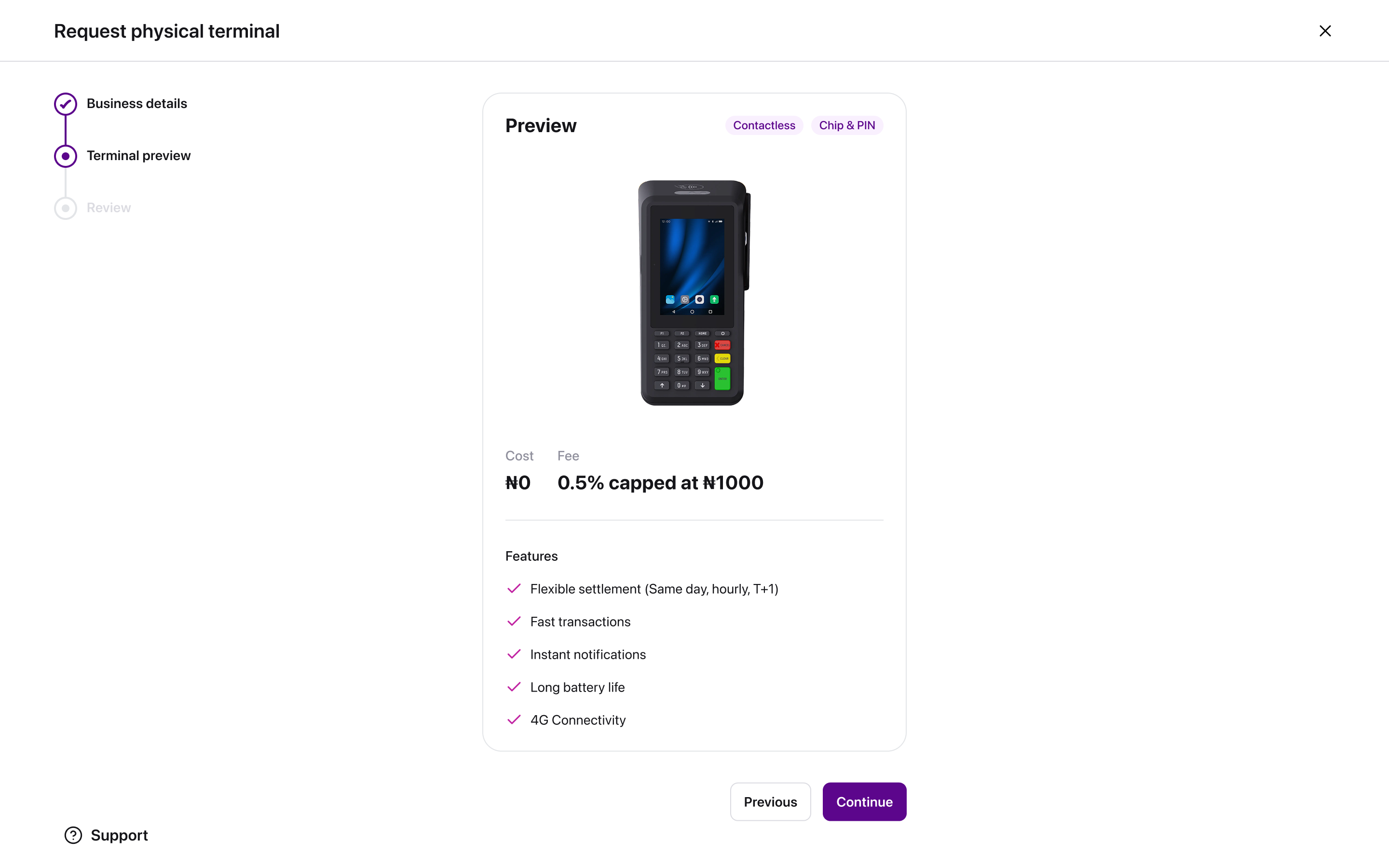
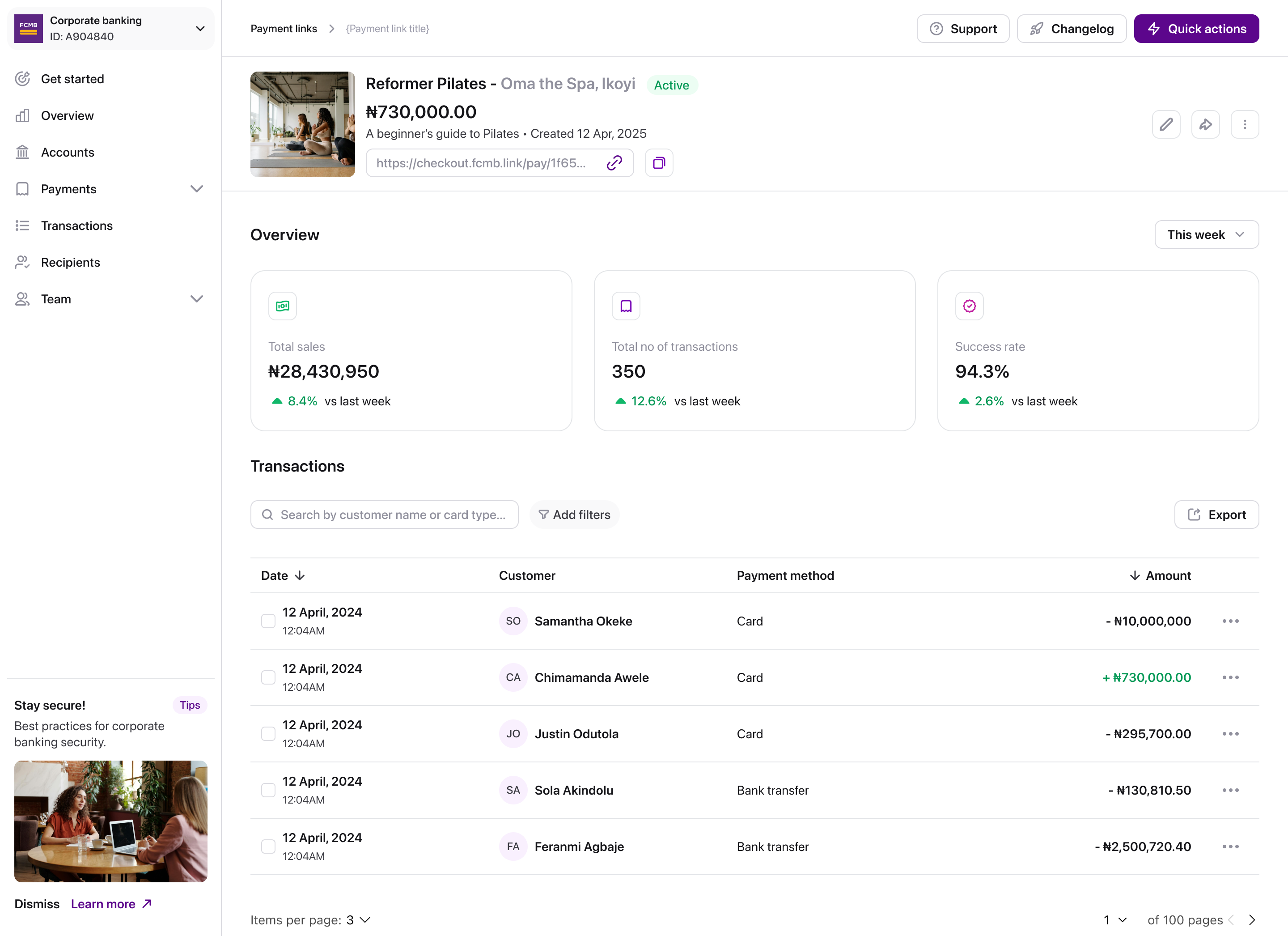
Physical terminals. Virtual terminals. Payment links. Outlets.
Collections was the most complex module: a hybrid physical and digital product. Businesses could accept payments via a physical terminal, a virtual terminal on-screen, a shareable payment link, or through outlet management. Each surface had its own setup flow, state management, and edge cases.
Outgoing Payments
Payments before they hit the ledger.
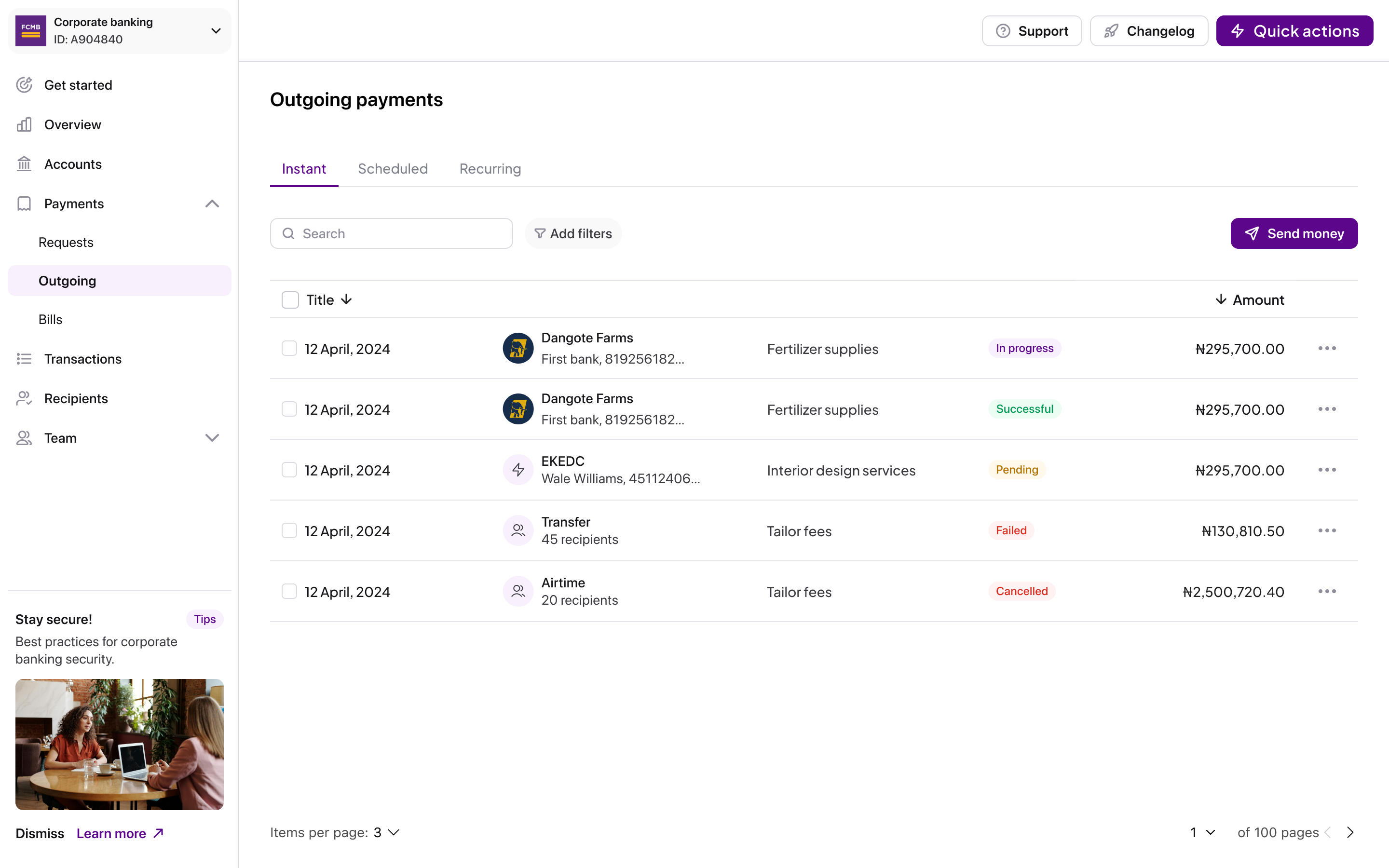
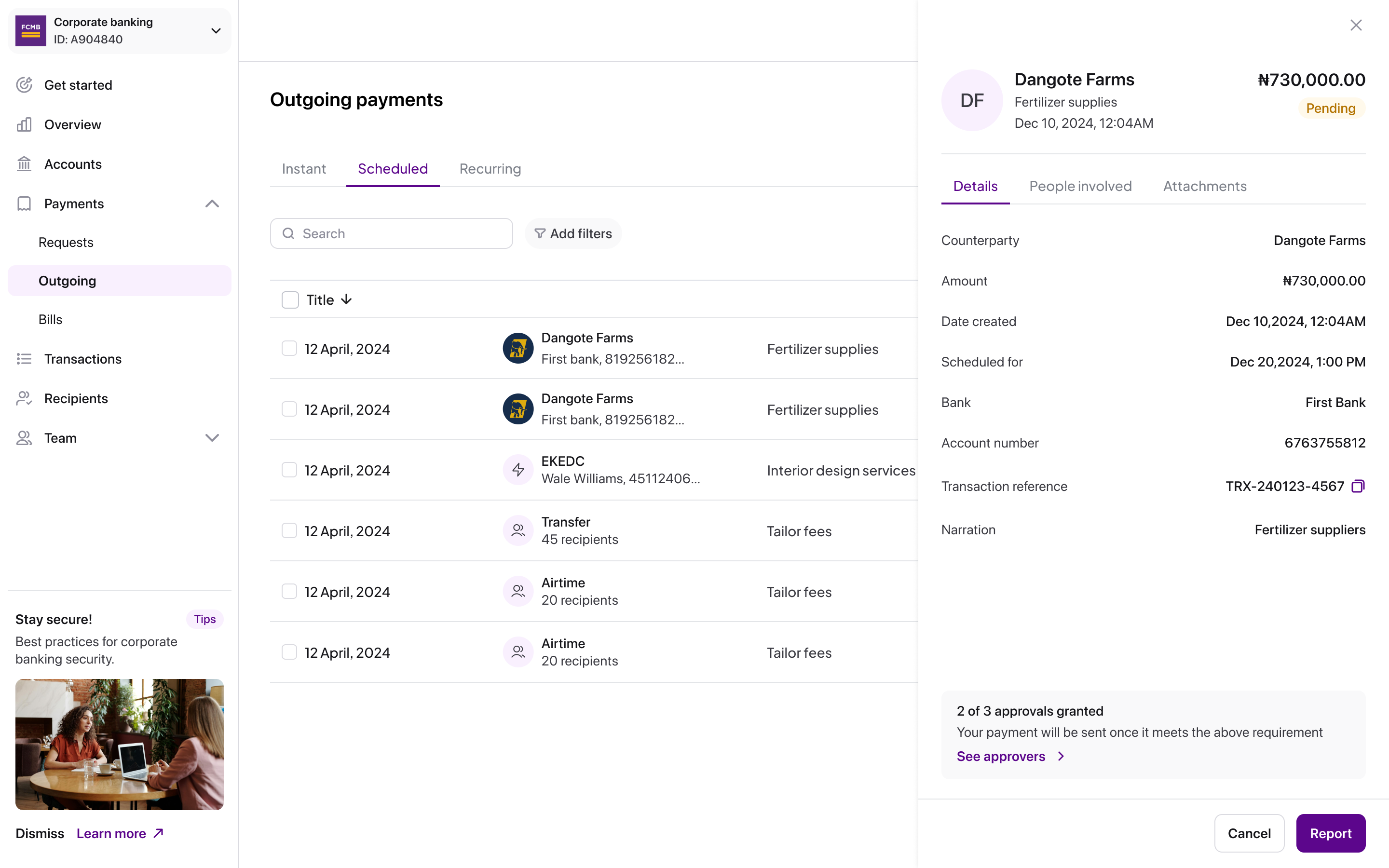
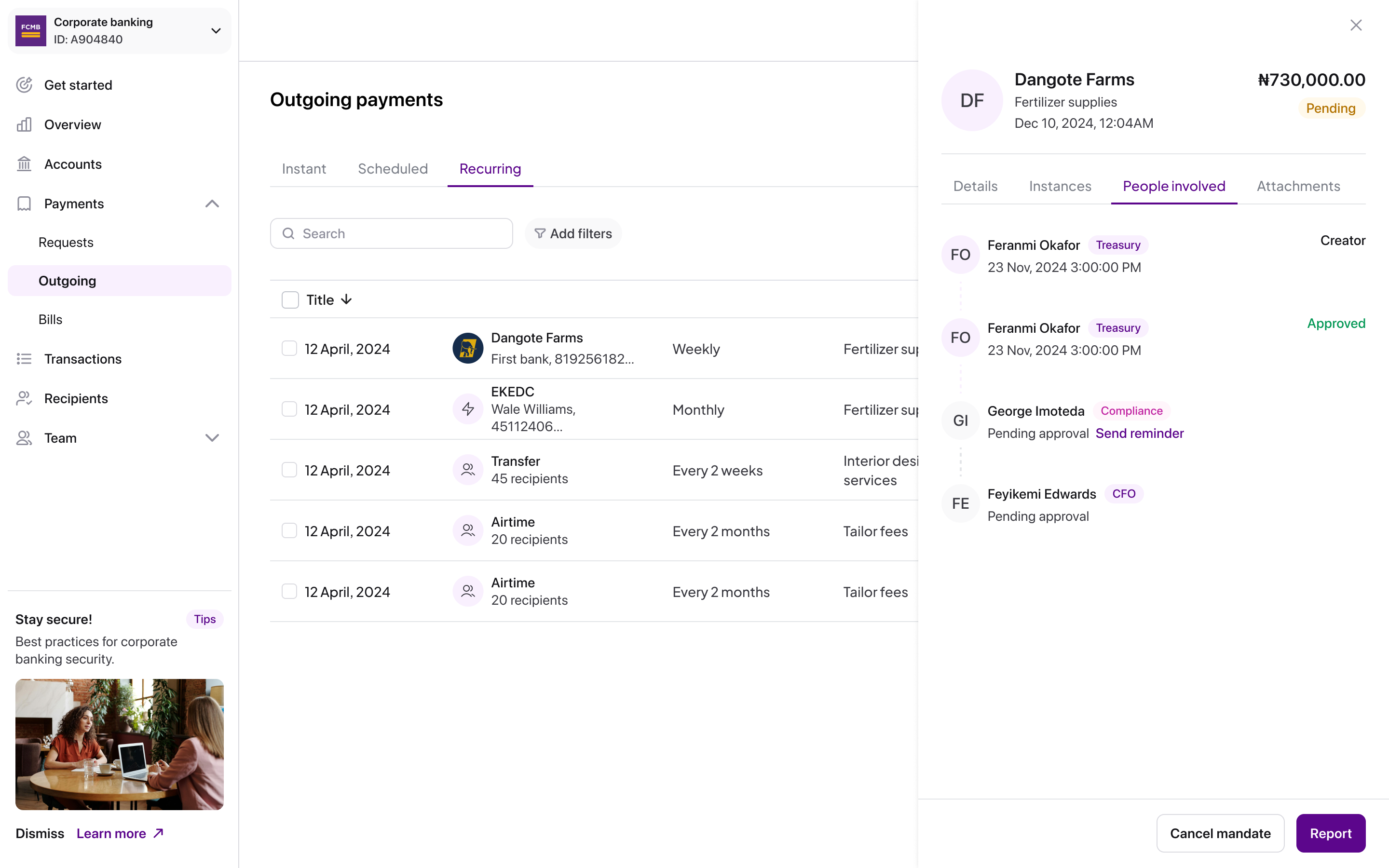
Outgoing Payments manages transactions in motion: instant, scheduled, and recurring payments that may still be awaiting approval before they're sent. Designing the three-tab structure and the approval state required careful thinking about how finance teams actually operate day-to-day.
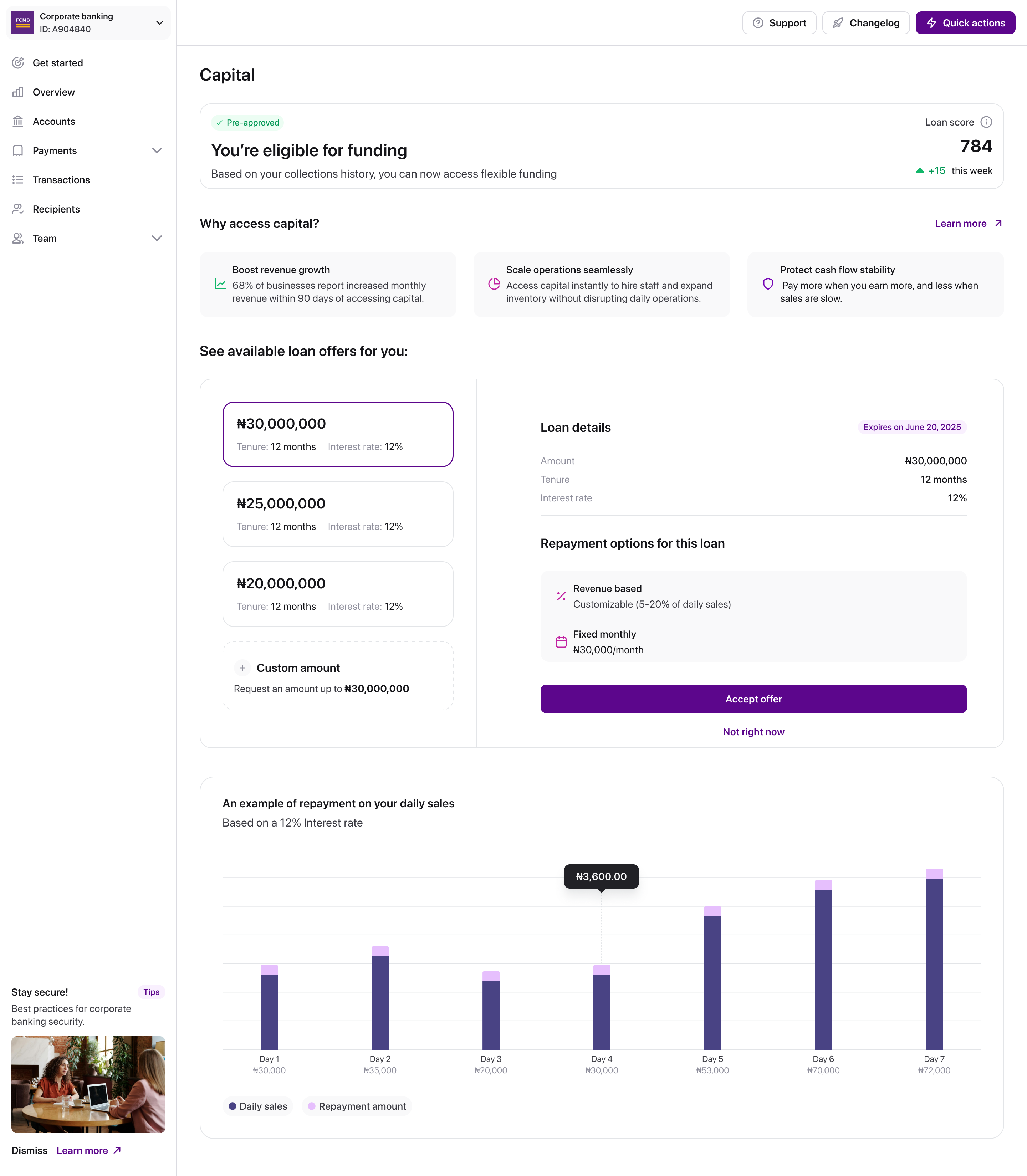
Capital
Access to capital, built into the banking experience.
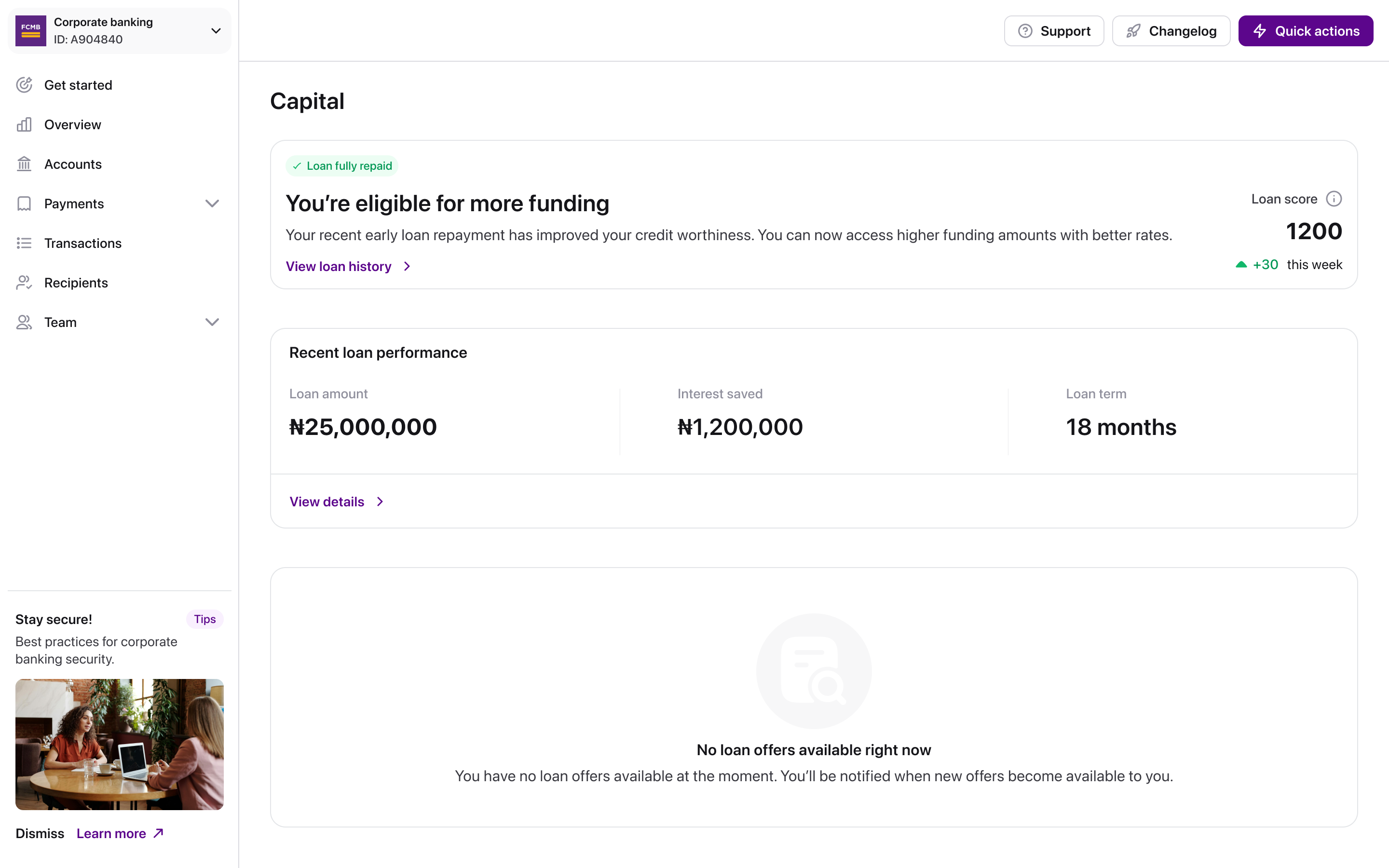
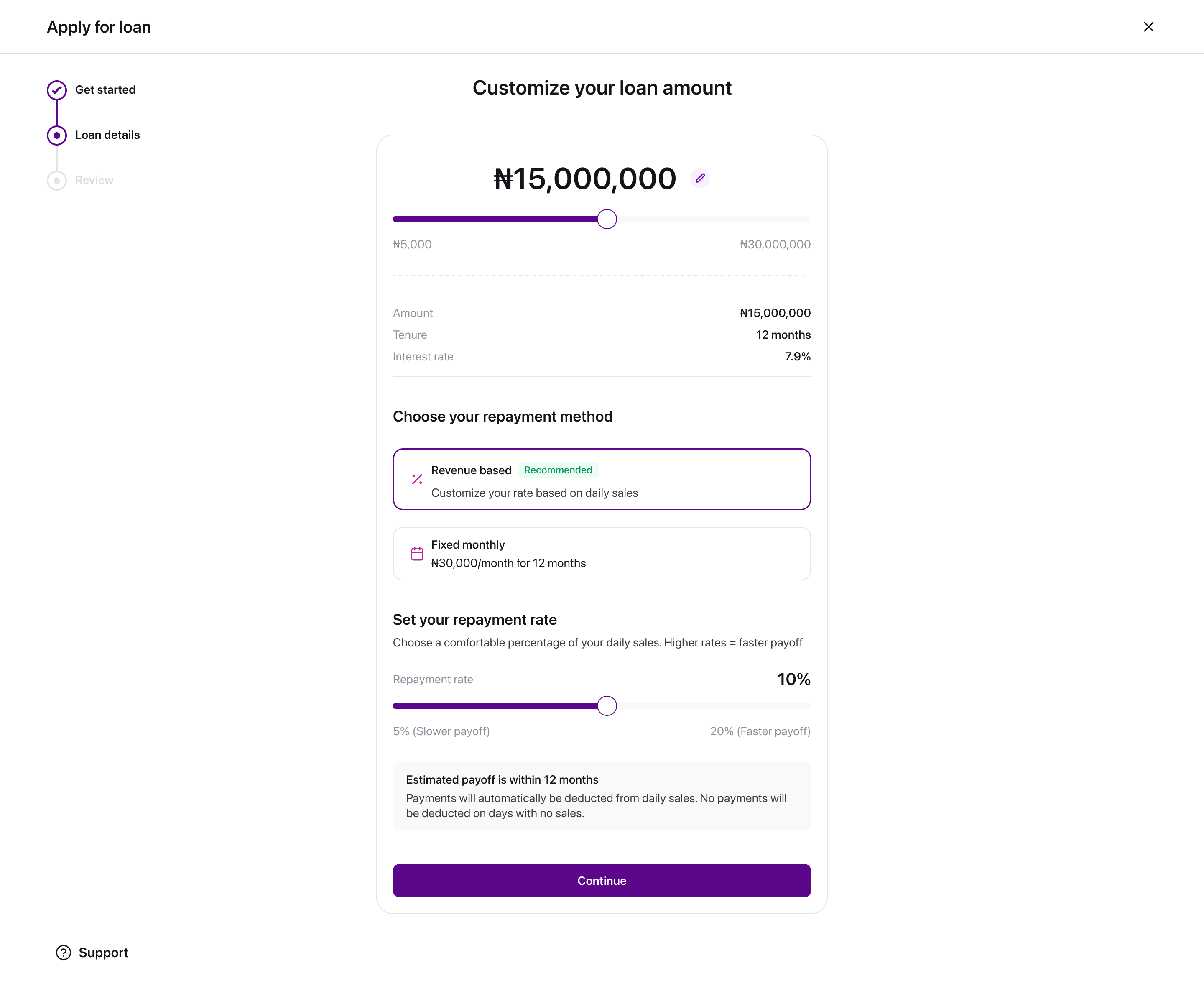
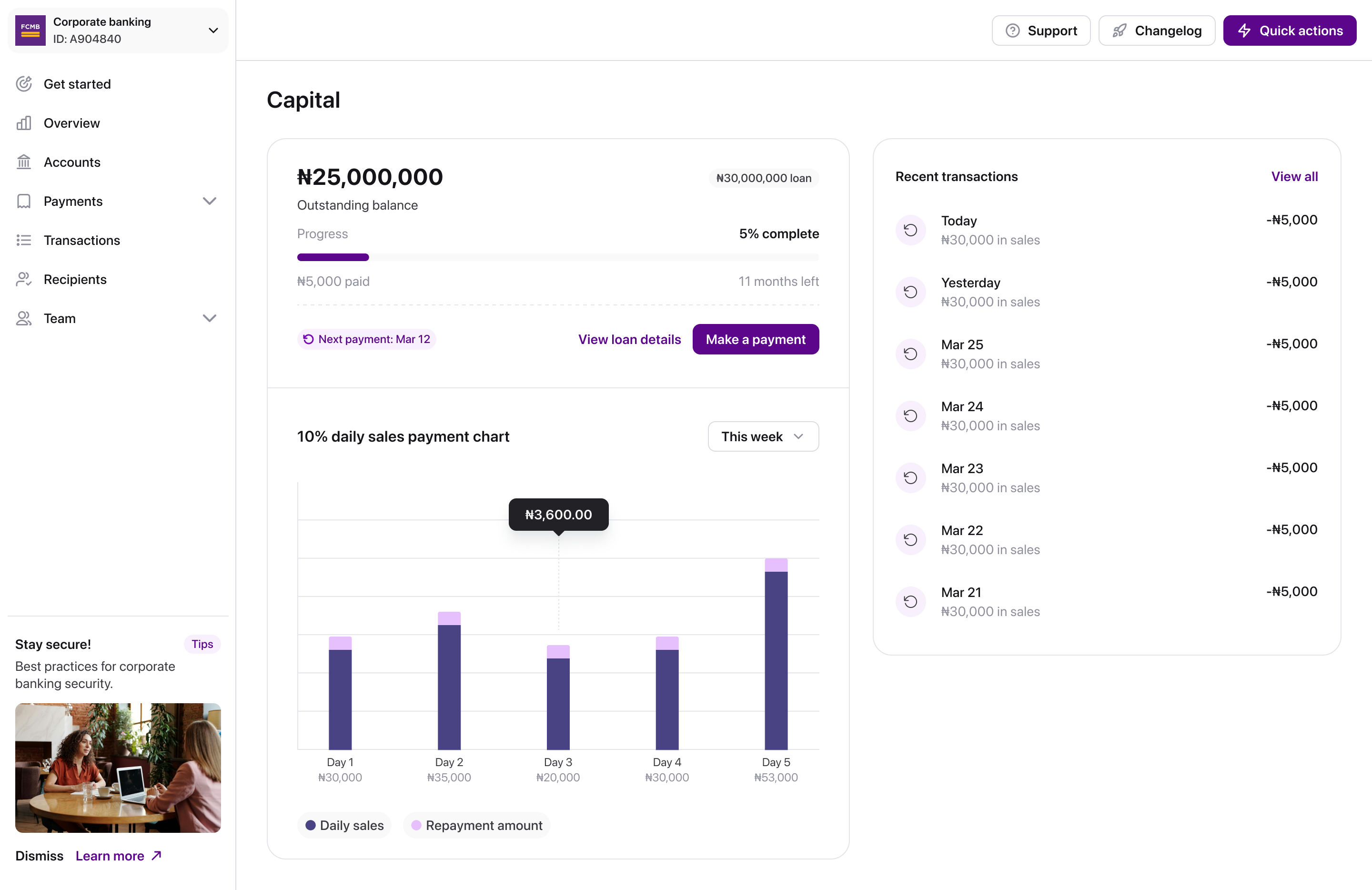
The Capital module lets businesses apply for and manage lending products directly within the platform. Designing this meant handling application flows, offer states, and active loan views, all within a product where trust and clarity are non-negotiable.
Design System
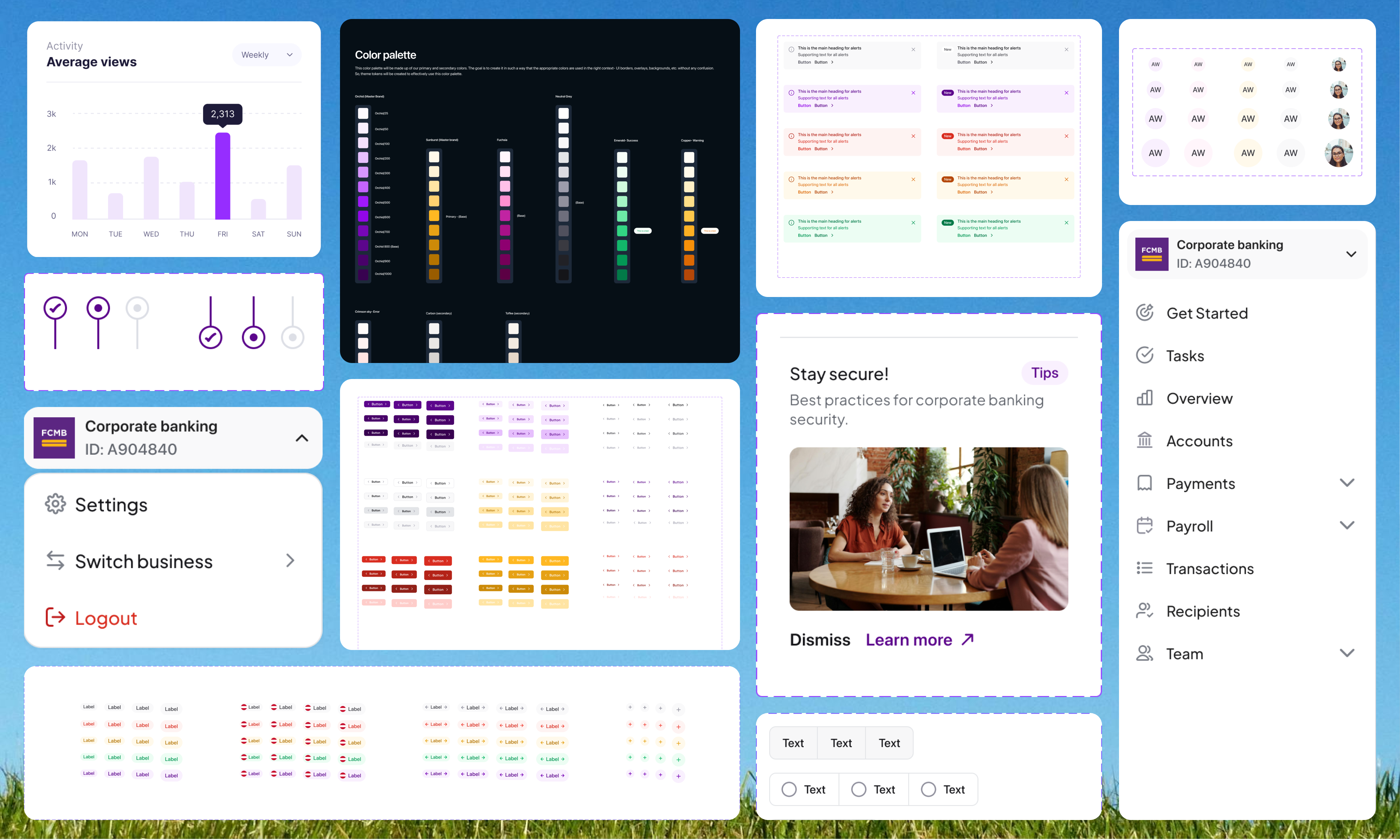
Built from scratch, used across everything.
There was no shared design language before I joined. I established the system ground-up: 5 foundation layers covering colour, typography, spacing, grid layout, and elevation, plus 21 shipped components covering everything from buttons and inputs to data tables, modals, and navigation. Every module references the same system. Designers who joined later have continued building on it.
What's New
Not a redesign. A new product.
Seven capabilities didn't exist in the old platform at all. A dashboard giving businesses a real-time view of their financial position. Multi-level approvals based on roles and transaction amounts. Authentication configurable across Google Authenticator, Authy, SMS, and email. Recurring payments for payroll and vendors. Bill payments for utilities and tax. A full audit trail showing who did what and when. And real-time notifications for approvals, failures, and alerts. These weren't nice-to-haves. They were what corporate banking customers actually needed.
Reflection
Building the product and the system at the same time is the fastest design education there is.
Building the product and the system simultaneously meant every component decision was tested in a real context immediately. It also taught me how to hold complexity without losing coherence: 20+ modules, two markets, one consistent experience.